
Northern Corridor Insecurity: Drivers and Road Users Need Protection
The Northern Corridor is a critical economic lifeline for Kenya and the wider East African region. Every day, thousands of trucks and passenger vehicles use it to transport fuel, food, manufactured goods and other essential cargo.
But increasingly, the people using this corridor are becoming victims of insecurity.
Truck drivers and other motorists are facing cases of assault, killing, stoning of vehicles, robbery, cargo theft and fuel siphoning. From the experience and concerns raised by transport stakeholders, a week hardly goes by without an incident being reported somewhere along the corridor.
The Hotspots Are Known
The areas of greatest concern include Bonje–Mariakani, Nakuru–Busia and Malaba, with Kipkaren–Webuye and Kisumu–Busia being particularly worrying.
On 17 September 2026 early morning, another serious incident occured between Kipkaren and Lwandeti, where thugs allegedly attacked a truck crew, killing the driver and assaulting the turnboy. Such incidents demonstrate the risks faced by drivers simply trying to deliver cargo safely.
These are not just names on a map. They are sections where drivers and motorists are increasingly concerned about their safety.
The Kisumu–Busia route has recorded concerns over vehicle stoning and attacks on motorists, while the wider Northern Corridor has also faced reports of cargo theft and attacks against truck drivers.
The question is: if the hotspots are known, why are we still reacting to incidents instead of preventing them?
Border Congestion Has Become a Security Risk
Traffic snarl-ups at border points have also become hotspots for criminal activities, particularly at Busia and Malaba.
When trucks are forced to remain stationary for long periods, they become easy targets. Drivers have raised concerns about assault, cables being cut from trucks, cargo seals being stolen and other forms of interference with vehicles and cargo.
Busia has another worrying problem: children hanging onto the backs of moving trucks. This is extremely dangerous and exposes children to serious injury or death while also creating additional road-safety and security concerns.
Border congestion should therefore no longer be viewed only as a trade and transport problem. It is also a security problem.
Poor Roads Are Also Contributing to Insecurity
We must also address the condition of our roads.
Sections such as the Kisumu–Busia highway and Bonje–Mazeras road have long-standing concerns around poor road conditions. Potholes, slow-moving traffic, breakdowns and unnecessary delays can create opportunities for criminals to target motorists.
A truck forced to slow down or stop because of poor road conditions is an easier target than a vehicle moving freely.
Road infrastructure and security must therefore be treated as interconnected issues.
Accidents Becoming Opportunities for Criminals
Another worrying trend is the theft of cargo and fuel from trucks that have broken down or been involved in accidents.
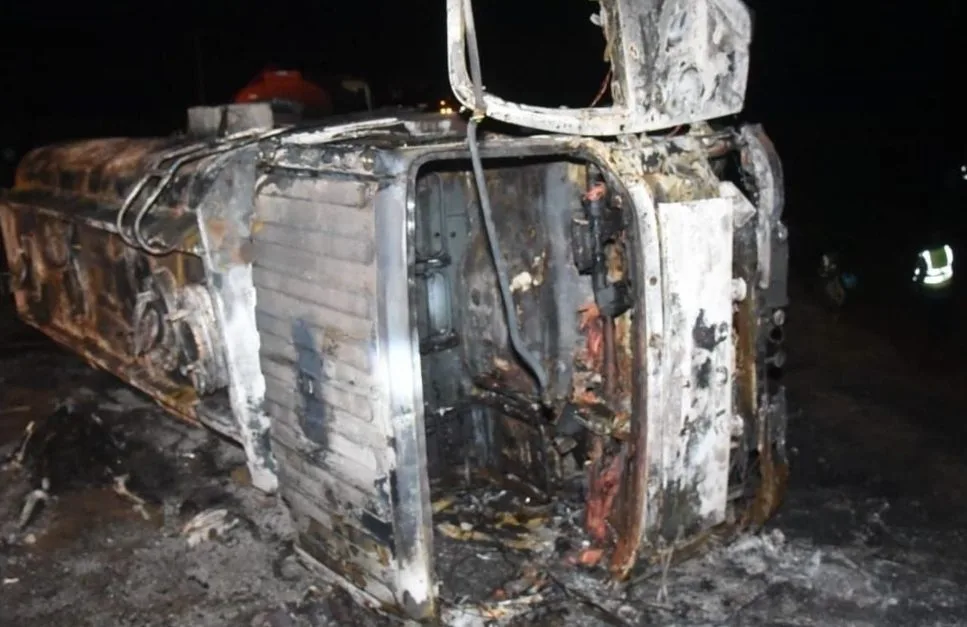
The tragedy near Paul Boit High School along the Eldoret–Webuye road on the night of 17 September 2026 should serve as a wake-up call. A fuel tanker involved in an accident later exploded after people reportedly rushed to the scene to siphon fuel, leaving 2 people dead 14 others nursing burns.
An accident involving a fuel tanker should immediately become a controlled emergency scene. Police and emergency responders must have the capacity to secure the area and keep members of the public away from dangerous cargo.
The Northern Corridor Police Unit Needs Strengthening
There are serious concerns about the capacity of the Northern Corridor police unit, including reports that it has only two capable patrol vehicles.
How can such limited resources adequately cover a corridor carrying thousands of vehicles every day?
We call on the National Police Service to urgently review the deployment and resources of the unit, including increasing patrol vehicles and officers in known hotspots.
There is also a need to review the composition of the unit. Transport stakeholders have raised concerns about the high number of older officers deployed along the corridor.
This is not a criticism of experienced officers, whose knowledge remains valuable. However, the NPS should consider bringing in more young, energetic and physically capable officers, while maintaining a balance with experienced personnel.
What Happens After Drivers Are Robbed?
The insecurity problem does not end when the attackers disappear.
Drivers often lose phones and other electronic gadgets during robberies. Some victims have raised concerns about delays in having their devices tracked, with some saying they have waited months or even more than a year for meaningful progress.
There are also complaints from some victims that they are expected to facilitate expenses before serious efforts to track their gadgets begin.
These concerns require clear answers from the Directorate of Criminal Investigations (DCI).
DCI has demonstrated the ability to trace and recover stolen phones. The concern is therefore about how quickly and consistently this capacity is made available to ordinary victims.
A stolen phone should be investigated promptly. The longer it takes to trace a device, the greater the possibility that it will be sold, moved across borders or have its identifying information altered.
More importantly, tracking a stolen gadget can potentially lead investigators to the people responsible for the robbery and other related crimes.
The question, therefore, is not whether the technology and investigative capability exist.
The question is whether victims of attacks along the Northern Corridor are receiving timely access to that investigative capability.
We Need Action, Not Just Reaction
There should be an urgent multi-agency review involving NPS, DCI, NTSA, KeNHA, county governments, transport associations, truck owners and drivers’ organisations.
Key measures should include:
- More patrol vehicles and police officers along known hotspots.
- Increased night patrols and rapid-response capacity.
- Stronger security at Busia and Malaba border points.
- Measures to reduce prolonged truck congestion at border crossings.
- Protection against cable cutting, cargo-seal theft and other truck-related crimes.
- Action to stop children from hanging onto moving trucks.
- Faster investigation and tracking of stolen phones and other gadgets.
- Better protection of accident scenes, particularly those involving fuel and hazardous cargo.
- Urgent improvement of poor road sections such as Kisumu–Busia and Bonje–Mazeras.
- Regular security meetings with drivers and transport stakeholders.
Drivers Deserve to Reach Their Destinations Alive
Truck drivers are essential workers. They move the goods that keep our economy and the region moving, often spending days and nights away from their families.
They should not have to choose between doing their jobs and protecting their lives.
The attacks on motorists, insecurity at border congestion points, poor road conditions, cargo and gadget theft, and the Paul Boit tanker tragedy all point to the need for a stronger and more coordinated response.
The hotspots are known. The challenges are known. What is needed now is action.
The Northern Corridor must be protected not only because it carries cargo, but because it carries people.