
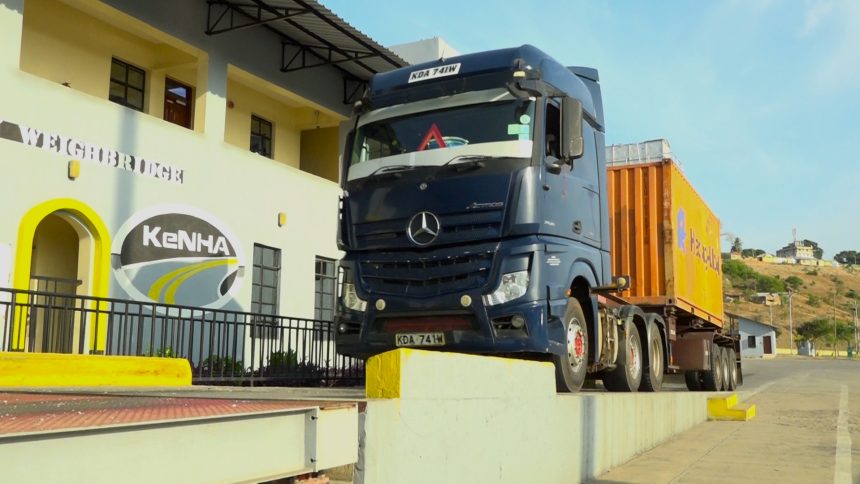

How repeated weighing is undermining Kenya’s Northern Corridor
Kenya has spent years talking about eliminating Non-Tariff Barriers (NTBs) and making the Northern Corridor faster, more efficient and more competitive. The State Department for East African Community Affairs is currently working with various agencies to address the very delays and inefficiencies that make the movement of goods across the region expensive and unpredictable. In April 2026, the Principal Secretary for EAC Affairs, Dr. Caroline W. Karugu, acknowledged that persistent NTBs along the Northern Corridor were hurting Kenya’s competitiveness and contributing to cargo diversion to competing routes.
But there is an uncomfortable question that must be asked:
Can a system designed to control overloading itself become a Non-Tariff Barrier?
For many truck drivers and transporters using Kenya’s Northern Corridor, the answer increasingly appears to be yes.
The Presidential Directive was clear
Following the Presidential stakeholder engagement at the Port of Mombasa in July 2023, the government announced measures aimed at reducing the number of weighbridges and confining the weighing of cargo to points of entry and exit. The Ministry of Roads and Transport stated that the objective was to facilitate faster movement of goods and reduce barriers along the Northern Corridor.
In February 2024, the Ministry further stated that the directive had been implemented, allowing cargo to be weighed only at the port of entry in Mombasa and the port of exit at Malaba.
The Kenya Transporters Association subsequently clarified that, for transit cargo under Customs Control on the Northern Corridor, trucks should be weighed at the start and at the exit of the journey. It also explained that trucks would still pass through weigh-in-motion systems, but these were intended to be integrated with the relevant systems so that compliant trucks could proceed without unnecessary intervention.
So why, years later, are transporters and drivers still encountering multiple weighing points along the same journey?
That is the question the authorities need to answer.
Why weigh a truck four/five times?
Consider a truck leaving the Port of Mombasa.
It may be weighed at the point of entry. It then encounters Dongo Kundu, Mariakani, Mlolongo, Gilgil and Webuye along the Northern Corridor. A 2026 EAC Regional Time Release Study confirms that transit trucks are currently weighed at these four Kenyan weighbridges between Mombasa and Malaba.
The practical question is simple:
If a truck has been weighed at the point of entry, found compliant, sealed and placed under cargo-tracking controls, why should the same cargo repeatedly face substantive weighing interventions along the journey?
The driver has not manufactured another load halfway to Malaba.
The container has not magically acquired additional tonnes.
And where the cargo remains sealed and under an electronic tracking regime, there should be a strong presumption that the original verified weight remains the reference point unless there is a legitimate and transparent reason to suspect tampering or a change in the cargo.
Repeated weighing creates queues, uncertainty, additional costs and opportunities for disputes.
It also creates a dangerous situation where a transporter can be compliant at one weighbridge and suddenly become non-compliant at another.
The Webuye question
The problem is not theoretical.
In May 2026, truck drivers protested delays at the Webuye weighbridge after machine failures reportedly left trucks stranded for several days. Drivers also complained that loads which had passed weighing points in Mombasa, Mlolongo and Gilgil were subsequently found to be overweight at Webuye.
This raises a fundamental question about the integrity and consistency of the weighing system.
Which weight should a transporter trust?
If a truck is weighed at one station and declared compliant, then weighs again hundreds of kilometres later and is declared overweight, the driver needs more than a fine. The driver deserves a transparent explanation.
Is the difference caused by:
- calibration?
- axle positioning?
- uneven weighing surfaces?
- equipment malfunction?
- differences between static and weigh-in-motion systems?
- inconsistent enforcement procedures?
- human error?
- or an actual change in the vehicle or cargo?
Without transparent answers, suspicion will naturally grow.
And suspicion is bad for business.
Mlolongo and Gilgil: delays that defeat the purpose of trade facilitation
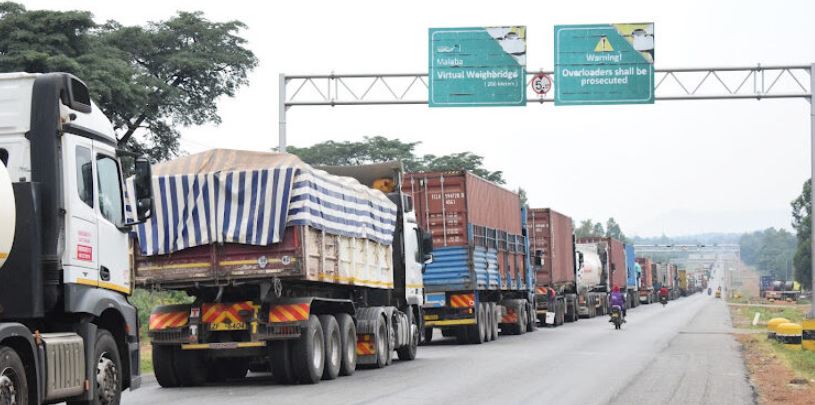
Mlolongo and Gilgil have for years been among the places associated with congestion and delays affecting heavy commercial vehicles.
A weighbridge should facilitate road safety and protect infrastructure. It should not become a permanent checkpoint where compliant cargo is repeatedly subjected to processes that the government itself has promised to eliminate or streamline.
The EAC has long recognised weighbridges as a significant NTB concern. Its NTB monitoring material identifies insufficient and slow weighbridge stations as causes of long queues and delays in cargo delivery. It also recommends entry-point weighing and electronic systems to improve transparency and allow transporters to see axle-load readings.
This is not a new complaint.
It is a structural problem that has been identified repeatedly.
What happens when the scale says something different?
This is where the greatest injustice can occur.
A transporter can leave Mombasa believing that the vehicle is compliant. The same truck can pass through several stations and then be told at another station that it has exceeded the permitted weight.
The consequences can be severe.
The transporter may face:
- heavy penalties;
- delays;
- parking charges;
- cargo rearrangement or offloading;
- additional fuel and operational costs;
- missed delivery schedules;
- contractual penalties;
- loss of income for the driver; and
- damage to the reputation of the transport company.
The 2026 Webuye incidents illustrate precisely how machine failures and weighing disputes can compound these costs, with drivers reporting days of delays and additional parking charges.
The bigger question is whether the transporter should bear the full burden where there is credible evidence that the vehicle was previously weighed and found compliant.
Calibration cannot remain a mystery
One of the most important issues is calibration.
KeNHA’s own procurement documentation for weighbridge operations states that weighing equipment is to be calibrated quarterly, or as instructed by the Engineer, by the Weights and Measures Department. It further provides that a calibration certificate is issued after each calibration exercise and that a copy should be displayed at the weighbridge station. (Kenha)
That is a positive requirement.
But the question from the transport sector is:
Can drivers and transporters easily verify that the equipment being used to impose a financial penalty is currently calibrated and certified?
If a driver challenges a weighing result, the system must provide an objective mechanism for verification.
The public should not be expected to simply trust a machine because it sits inside a government weighbridge.
Where a person’s livelihood or a company’s business can be affected by the reading, transparency must be part of the system.
Where is public participation?
Another serious concern is communication.
New policies, new weighing procedures, changes in enforcement and even old regulations that are suddenly enforced can have a major impact on thousands of drivers and transporters.
How are drivers expected to comply with rules they have never been adequately informed about?
A professional driver spends most of his working life on the road. He may not have access to government circulars, policy documents or legal notices every time a procedure changes.
This is why public participation and stakeholder sensitisation are not luxuries.
They are essential.
KeNHA, the Ministry of Roads and Transport, KRA and other agencies dealing with transit cargo need to communicate directly with the people who actually use these systems.
Drivers need to know:
- where they are required to weigh;
- when they are required to weigh;
- what the applicable axle and gross vehicle mass limits are;
- what happens when a vehicle is found overweight;
- how a driver can challenge a disputed reading;
- how calibration is verified;
- what happens when a weighbridge machine fails;
- whether a previous compliant weight can be recognised; and
- who is responsible for costs caused by equipment failure or system downtime.
These should not be secrets.
They should be standard information available at every relevant weighbridge and through the agencies’ public communication channels.
KeNHA must come to the table
Stakeholder engagement cannot be meaningful if one of the most important agencies in the process is rarely available to answer questions.
Transporters and drivers need KeNHA at stakeholder forums.
They need officials who can explain the technology, the legal framework, calibration, enforcement procedures and the implementation of the Presidential Directive.
It is not enough for stakeholders to sit in meetings, raise complaints and leave with unanswered questions.
The agency responsible for managing the road infrastructure and weighbridge system must participate directly in finding solutions.
The transport industry is not asking for the removal of axle-load controls.
Nobody should.
Overloading damages roads, increases maintenance costs and can compromise road safety.
The demand is for fair, consistent, transparent and efficient enforcement.
The bigger NTB problem
Kenya cannot simultaneously tell the EAC region that it wants to eliminate Non-Tariff Barriers while allowing processes that unnecessarily delay trucks carrying regional trade.
The Northern Corridor is an economic artery.
When a truck is delayed at a weighbridge, the cost does not stop with the driver.
It affects the transporter, importer, exporter, clearing agent, manufacturer, consumer and ultimately the competitiveness of the entire region.
The EAC’s recent efforts to eliminate NTBs recognise exactly this problem. The government has set out reforms intended to reduce roadblocks, improve transit times and make the corridor more efficient.
But NTBs are not only roadblocks.
A bureaucratic procedure can be an NTB.
A four-day delay can be an NTB.
An unexplained fine can become an NTB.
Repeated weighing can become an NTB.
A machine failure without an effective contingency mechanism can become an NTB.
And inconsistent application of government policy can become an NTB.
What should change?
Kenya should urgently implement a clear and publicly understood weighbridge framework.
1. Enforce the Presidential Directive consistently
For qualifying transit cargo, the entry and exit weighing principle should be clearly implemented across the Northern Corridor.
2. Distinguish monitoring from enforcement
Weigh-in-motion systems can be used for monitoring and road protection, but compliant vehicles should not be subjected to repeated punitive weighing interventions without a clearly defined legal basis.
3. Create a single trusted weight record
Where cargo remains sealed and under an approved tracking system, the verified entry weight should be electronically available to relevant agencies along the corridor.
4. Make calibration transparent
Calibration certificates should be clearly displayed and easily accessible to drivers and transporters, with dates of calibration and expiry prominently shown.
5. Introduce an independent dispute mechanism
Where two government weighbridges produce materially different results, the transporter should have access to an independent verification process before being subjected to punitive enforcement.
6. Publish the rules
KeNHA and other responsible agencies should publish simple, driver-friendly guidelines explaining the weighing process, penalties, exemptions, appeal procedures and applicable weight limits.
7. Conduct genuine stakeholder engagement
Drivers, transporters, logistics companies and their associations must be involved before major operational changes are introduced.
8. Establish a machine-failure protocol
A government machine failure should not automatically become a transporter’s financial disaster.
If a weighbridge is not functioning, there should be a clear contingency procedure, including communication on whether vehicles should proceed to another authorised facility.
9. Bring KeNHA into every serious stakeholder conversation
Complaints about weighbridges cannot be resolved without the institution responsible for them being present, accountable and willing to provide answers.
Kenya must decide what kind of corridor it wants
Kenya has an opportunity to become the most efficient logistics gateway into East and Central Africa.
But that requires more than building roads and ports.
It requires trust.
A transporter must trust that when a government weighbridge declares a truck compliant, that decision will be respected.
A driver must trust that the equipment being used against him is properly calibrated.
A business must trust that a Presidential Directive will be implemented consistently.
And regional trading partners must trust that cargo can move through Kenya without unnecessary delays and unpredictable costs.
The government has already recognised that NTBs are hurting the Northern Corridor. The State Department for EAC Affairs is working to address them.
Now the weighbridge question must be confronted honestly.
If the Presidential Directive says weighing should be confined to the appropriate entry and exit points, why are trucks still experiencing repeated weighing interventions along the corridor?
If a truck is compliant at the point of entry, what causes it to become overweight at Webuye?
If equipment is calibrated, where are the certificates and how can an affected transporter verify them?
If policies change, where is the public education for the driver who is expected to comply?
These are not anti-government questions.
They are accountability questions.
Kenya needs strong axle-load enforcement. But strong enforcement does not mean unnecessary enforcement.
We need a system that protects our roads without turning the roads themselves into barriers to trade.
The ultimate goal should be simple:
Weigh once where the law requires it. Verify transparently. Allow compliant cargo to move. Penalise genuine violations. Eliminate unnecessary delays.
That is how Kenya can protect its roads, respect its drivers and transporters, and genuinely eliminate the Non-Tariff Barriers that continue to undermine the Northern Corridor.
The time for another directive is not necessarily what is needed. The time for consistent implementation, transparency and accountability is.


Also Scanner of Consigment for transit should be once and T1 generation in uganda
The most important to kenha weighbridges calibration should be done accurate and leave the Mombasa trucks weigh at mariakani proceed to exit point malaba or busia to be final weighing.and this issue of hazardous good staying in the jam it’s not safety.