
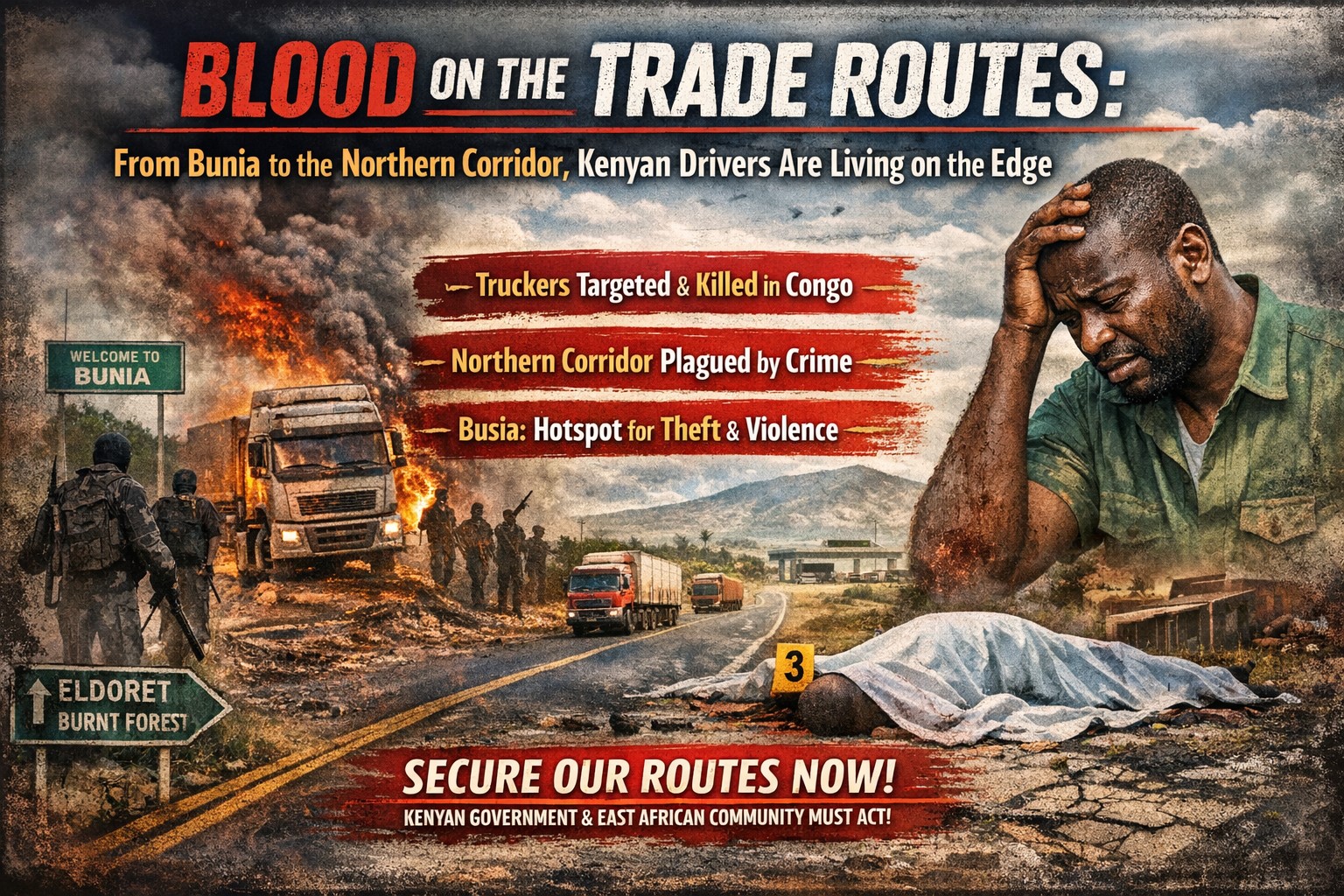

The wheels of East Africa’s economy are driven by thousands of truck drivers who brave long distances, harsh conditions, poor pay and tight deadlines to keep goods moving across borders. But today, those same routes are becoming corridors of fear, violence, and death.
In the Democratic Republic of Congo (DRC), insecurity has reached alarming levels. This year alone, three Kenyan truck drivers have lost their lives under tragic and disturbing circumstances. The latest victim, Edwin Njuguna, was brutally killed in Bunia, his body dumped and only discovered three days later. While the Kenyan government has intervened to facilitate the repatriation of his body, that alone does little to calm the growing anxiety among drivers who continue to use these routes.

For many, the question is no longer about efficiency or delivery timelines, it is about survival.
And the danger is not limited to Congo.
Just last night, a Kenyan driver was attacked and injured at the Nimule Border while waiting in a queue. As fellow drivers rushed to rescue him, the attackers broke into their trucks and robbed them. This incident highlights the growing boldness of criminal elements across regional routes and the complete lack of adequate security response mechanisms.
Despite Congo being a key trade destination within the East African Community, major transport routes remain dangerously exposed. Armed groups, criminal networks, and weak enforcement structures have created an environment where drivers are easy targets. The lack of coordinated regional security measures has left transporters vulnerable, with little to no assurance of protection once they cross the border.
This is not just a Congolese problem. Back home in Kenya, the situation is equally worrying.
The Northern Corridor, a critical artery for trade linking the port of Mombasa to landlocked countries, is experiencing a steady decline in security. The stretch between Nakuru and Bungoma has become particularly notorious. Earlier this year, Musyoki Kilundo, a truck driver transporting coffee from Uganda, was found dead, hanged along the Eldoret–Burnt Forest highway in what remains a chilling and unresolved case.
In March, another driver narrowly escaped death after being attacked by suspected robbers while making a brief roadside stop. He sustained injuries to his hand, a stark reminder that even the simplest actions can turn dangerous.
Busia, a key border town, has also become a hotspot for criminal activity. Despite repeated interventions and complaints, theft has become rampant. Trucks are vandalized in traffic, with cables being cut both in town and even within the customs-controlled areas. What is most concerning is the apparent inaction by authorities even after these incidents are formally reported.
Beyond physical insecurity, drivers are also facing systemic neglect from employers.
Labour laws in Kenya are widely abused within the transport sector. Once a driver leaves the yard, many employers show little concern for their welfare. A majority do not comply with legal pay structures, while others impose unrealistic mileage targets. Drivers assigned to high-risk routes are often denied risk allowances, despite the obvious dangers they face daily.
This is unacceptable.
We call upon the Ministry of Labour and Social Protection to urgently review labour laws surrounding drivers and conduct a comprehensive audit of all logistics companies. Those found violating labour regulations must be held accountable without exception.
This growing wave of insecurity is not just a threat to drivers, it is a direct threat to regional trade, economic stability, and livelihoods. If drivers cannot operate safely, supply chains will suffer, costs will rise, and the broader economy will feel the impact.
It is time for urgent and decisive action.
The Kenyan government, through the Ministry of Interior, must immediately step in to restore order along the Northern Corridor. Increased patrols, intelligence-led operations, and accountability within law enforcement are necessary to deter criminal activity.
At the same time, the East African Community must take a unified approach to security in the region. Cross-border trade cannot thrive in an environment where transporters are left unprotected. Joint security frameworks, coordinated patrols, and stronger diplomatic engagement with the DRC are essential to safeguard lives and ensure safe passage.
Truck drivers are not just transporters, they are the backbone of regional commerce. Their safety should never be an afterthought.
Until meaningful action is taken, every journey they make will continue to be a gamble between earning a living and losing their lives.
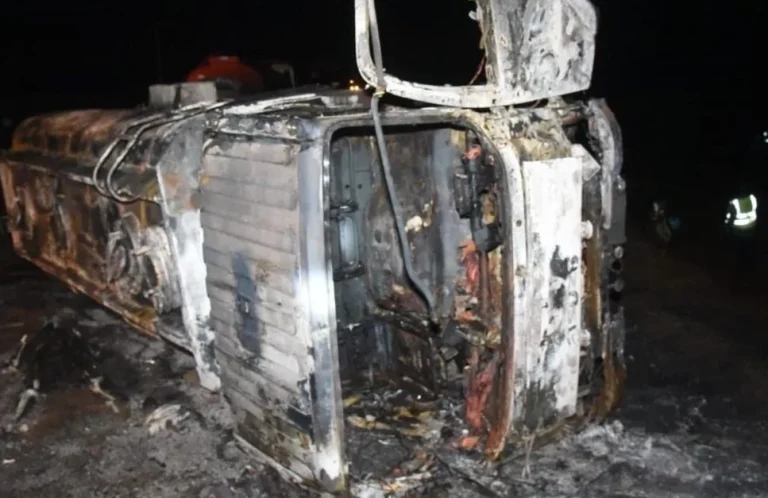
I tell all the drivers to respect other road user’s when you’re in the road you must be very kin in other word you must aim higher when you see in your side mirror the bus or matatu overtaking please give a spece for two matatu or bus don’t exrilet if possible you can apply you break paddle so as to save innocent people in the bus or matatu. Safety first